Can Customers Pay in Installments at Your Checkout?
Current as of October 2026.
Picture a small gift shop owner running her online store out of a converted garage. A customer fills a cart with $180 worth of candles and seasonal décor, gets to checkout, and abandons it without buying. She checks her cart abandonment data later and notices that the largest orders, the ones over $150, are leaving at the highest rate. Her standard card checkout is working fine for smaller orders. The bigger ones are disappearing. Buy now, pay later, often abbreviated as BNPL, lets shoppers split that $180 into four interest-free payments while the merchant receives the full amount, minus a fee, right away. Whether that tradeoff makes sense for your store depends on what you sell, what you charge, and how closely you watch your margins.
Why More Small Business Owners Are Adding Installment Options
Cart abandonment at the final checkout step is a persistent problem for online sellers at every scale, but it tends to hit hardest on mid-range and higher-ticket purchases. When a customer hesitates at $150 or $200, the friction is often psychological rather than financial. Installment options lower that perceived barrier without requiring you to discount the item or run a sale. According to the Federal Reserve's 2024 Diary of Consumer Payment Choice, younger consumers (ages 18 - 44) are more likely to use BNPL than older consumers, and BNPL adoption has increased in recent years. The report does not use the phrase 'grown steadily among shoppers in their 20s and 30s' and characterizes trends more broadly across age cohorts. That's the demographic most likely to abandon a cart over upfront cost. Adding installment options isn't a cure for a broken product page or weak photography, but if your checkout conversion drops off on larger orders, a BNPL option addresses the actual problem.
The holiday window makes timing relevant here. Shoppers in November and December are buying at larger average order values than any other time of year, and they're doing it across a compressed period where comparison shopping is intense. If a competitor in your category offers installments and you don't, the decision to click away can happen in seconds.
What Does BNPL Actually Cost the Merchant?
This is where small business owners frequently get a surprise. Standard card interchange on a typical consumer credit card runs somewhere in the range of 1.5 to 2.5 percent of the transaction, depending on the card type, your pricing model, and your processor. That spread matters a lot when you're operating on thin margins. A retailer with a 30 percent gross margin on a $200 item has $60 to work with before expenses. A 5 percent BNPL fee is $10 off that $60. Add shipping, packaging, and overhead, and the margin arithmetic gets uncomfortable fast.
There's also no standard contract across providers. Some BNPL services charge a flat fee per transaction on top of the percentage. Some have monthly platform fees. Some integrate directly with popular ecommerce platforms at no additional setup cost, while others require a developer to wire things up. Reading those terms carefully before signing anything is not optional. If you want to know what any of these fees look like on a statement alongside your other processing costs, a breakdown of how to read your online checkout fees line by line is worth the time before you add a new payment layer. You can find that kind of walkthrough at how to decode fees on your processing statement.
How Does BNPL Fit Into an Online Checkout Setup?
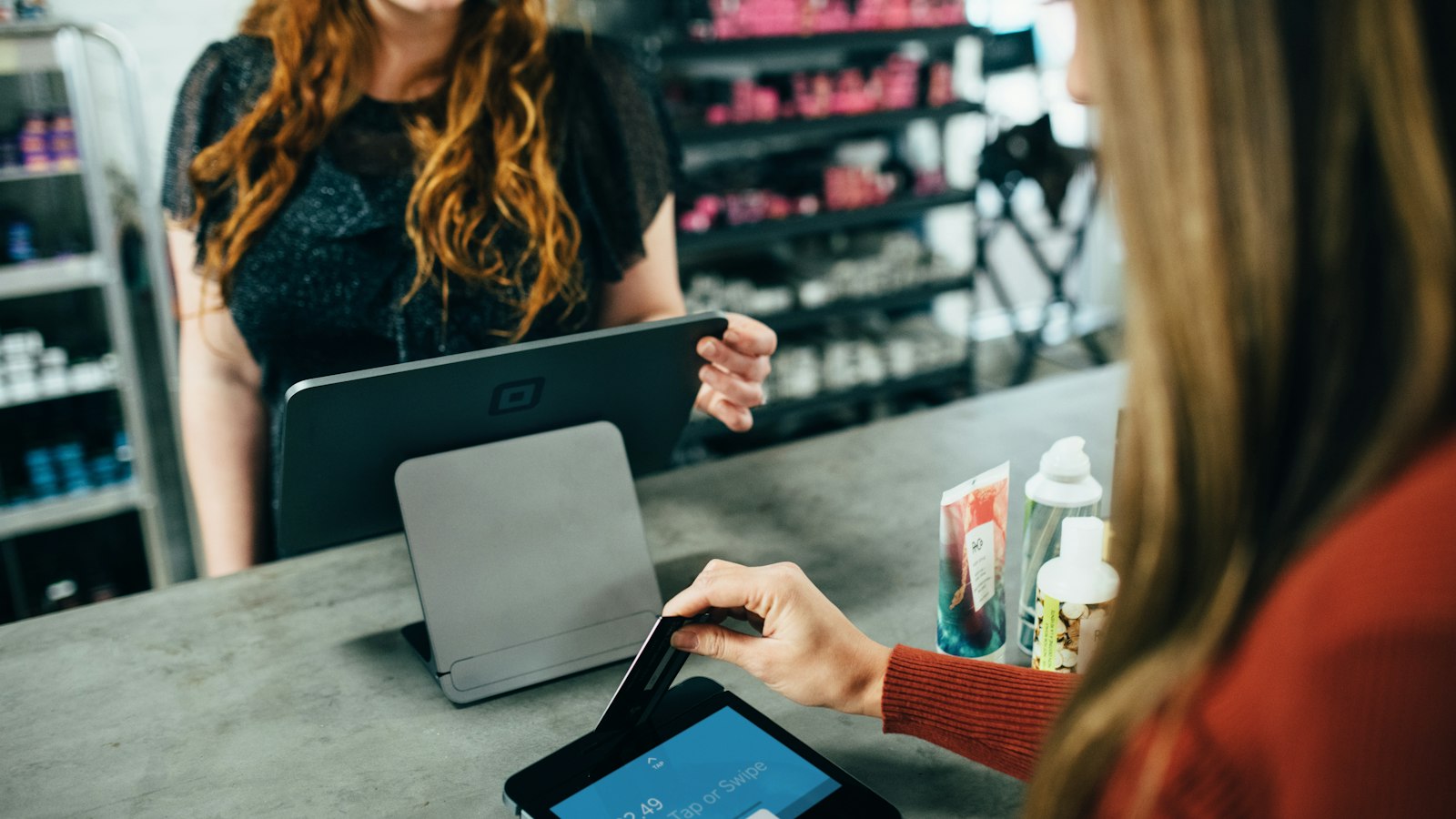
Most major BNPL providers offer plugins or native integrations with common ecommerce platforms, so the technical side is usually manageable without custom development. The customer selects the installment option at checkout, completes a soft credit check with the BNPL provider in seconds, and the order proceeds. You receive the full purchase amount, minus the provider's fee, on a schedule the provider sets, which may or may not match your normal payout timing. Some providers pay out within one to two business days; others batch weekly. That timing difference can create a cash flow gap if you're not watching it, particularly in a high-volume period like November and December.
For stores already set up with solid online checkout and payments infrastructureadding a BNPL layer is typically a plugin configuration rather than a full rebuild. The more important question is whether the provider you choose works with your existing gateway, since compatibility problems can delay your launch past the holiday window entirely if you start too late in October.
Chargebacks on BNPL transactions carry their own rules. The BNPL provider owns the consumer relationship after the transaction closes, so disputes may be resolved through the BNPL provider's process rather than your standard card chargeback workflow. That distinction matters for how you document orders and handle returns.
What's the Real Impact on Your Cash Flow and Margins?
The merchant fee is the most visible cost, but it's not the only one. Returns on installment purchases require coordination with the BNPL provider, and refund processing timelines vary by service. If a customer returns an item after their first installment, the provider handles the refund to the customer, but your payout may already have cleared, meaning the reversal comes back against a future settlement.
On the revenue side, the conversion lift on higher-ticket items is the case for adding BNPL. If a $200 average order converts at a meaningfully higher rate with an installment option than without, even after accounting for the higher fee per transaction, the net dollar result may favor offering it. The only way to know is to test it with real data from your own store, not a competitor's case study. Some ecommerce platforms allow A/B testing of checkout options; if yours does, that's a cleaner way to measure the effect than a gut estimate.
Businesses that also handle recurring orders or client billing may find that installment logic overlaps with how they structure invoicing and payment schedules for repeat customers though BNPL and invoice-based billing serve different customer situations and shouldn't be conflated.
Red Flags to Watch Before You Sign With a BNPL Provider
Not all BNPL integrations are built the same, and a few things can create problems that outlast the holiday season. Watch for contracts with early termination fees, providers who retain the right to change their merchant fee rate mid-contract, and integration agreements that lock you into a single provider exclusively. Also confirm that the provider is registered and operating in compliance with applicable consumer financial protection regulations. The Consumer Financial Protection Bureau has been actively reviewing BNPL practices since 2022, and the regulatory environment for these services is still developing as of October 2026.
Keeping Payment Costs Predictable Through the Holiday Rush
The businesses that handle high-volume seasons without losing margin control are usually the ones that know their baseline cost per transaction before they add anything new. If you know your effective processing rate on card payments today, you have a real benchmark to compare any BNPL fee against. If you don't know that number off the top of your head, pulling your last two or three monthly statements and calculating total fees divided by total card volume will get you there in about ten minutes.
Adding Installments Can Work, If the Math Works First
BNPL is a real conversion tool for the right product mix and the right price range. It's also a real cost that erodes margin if you add it without accounting for the fee difference. Getting the math right before October ends gives you the best shot at a holiday season where higher order volume actually means higher profit.
Common Questions
What Does BNPL Actually Cost the Merchant?
This is where small business owners frequently get a surprise. Standard card interchange on a typical consumer credit card runs somewhere in the range of 1.5 to 2.5 percent of the transaction, depending on the card type, your pricing model, and your processor.
How Does BNPL Fit Into an Online Checkout Setup?
Most major BNPL providers offer plugins or native integrations with common ecommerce platforms, so the technical side is usually manageable without custom development. The customer selects the installment option at checkout, completes a soft credit check with the BNPL provider in seconds, and the order proceeds.
What's the Real Impact on Your Cash Flow and Margins?
The merchant fee is the most visible cost, but it's not the only one. Returns on installment purchases require coordination with the BNPL provider, and refund processing timelines vary by service.
Your Next Step: A Clear Look at Your Processing Fees
Upward Merchant works with small business owners to review their current card processing costs, set up online checkout options including alternative payment methods, and make sure the fees showing up on your statement match what you actually agreed to pay. If you're heading into the holiday season and want to know whether your payment setup is costing you more than it should, get a free review of your processing fees or call 1-855-GET-UPWARD (1-855-438-8792) to talk through your setup with someone who handles this every day.
Sources:
- Federal Reserve. "2024 Findings from the Diary of Consumer Payment Choice." frbsf.org, www.frbsf.org/our-district/files/2024-findings-from-the-diary-of-consumer-payment-choice.pdf.
- CFPB. "Buy Now, Pay Later: Market Trends and Consumer Impacts (2022)." consumerfinance.gov, www.consumerfinance.gov/data-research/research-reports/buy-now-pay-later-market-trends-and-consumer-impacts.
- CFPB. "Newsroom: CFPB Publishes Research Report on Buy Now, Pay Later." consumerfinance.gov, www.consumerfinance.gov/about-us/newsroom/cfpb-publishes-research-report-on-buy-now-pay-later.
- Visa. "Visa Fees and Interchange Information." usa.visa.com, usa.visa.com/support/consumer/visa-fees.html.
DISCLOSURE: This article is general information, not financial, legal or tax advice. Upward Merchant helps businesses set up payment processing, POS and related services through partner providers, and rates, approval and terms depend on each business. Mentions of other businesses and organizations are for information only and do not imply endorsement or payment.
Want to know what you're really paying?
Send us a recent processing statement and we'll walk you through it line by line. Free, with no obligation.